3 min Read

By Parker Lynch
Recent reports suggest that Americans continue to struggle to afford healthcare,leaving many to choose between their health and putting food on the table. Findings from The Commonwealth Fund’s 2025 Affordability Survey conducted among 6,353 U.S. adults between the ages of 19 to 64 show that:
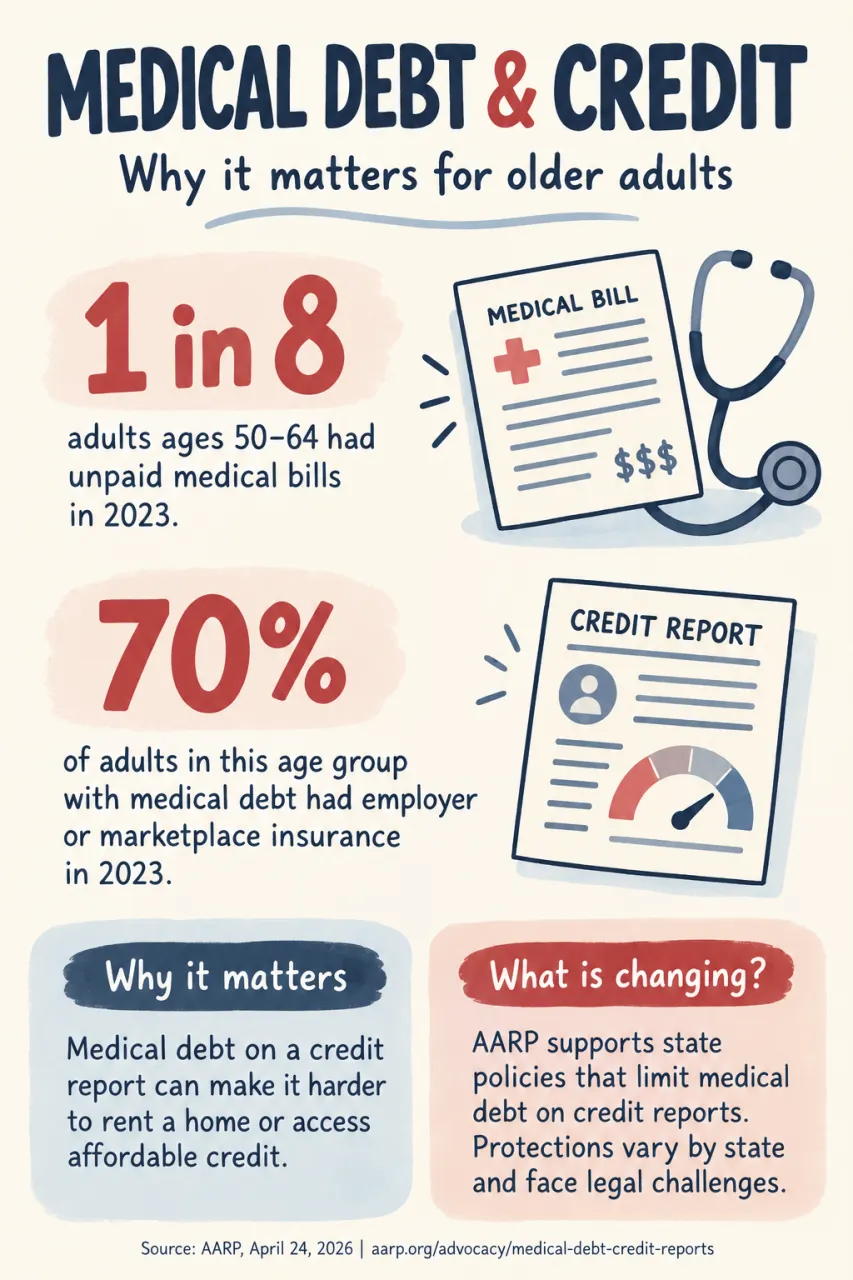
In addition to emotional and financial strain, unpaid medical bills can lead to negative credit reporting, thereby bleeding into other areas of financial security and wellness. When asked to propose policies that would alleviate these stressors, there was a near-unanimous response to remove medical debt from credit reporting.
According to the National Bureau of Economic Research, one in seven American adults carry medical debt, accumulating to approximately $88 billion dollars. Though major credit reporting agencies have stopped reporting medical debt under $500, large costs continue to reflect on credit scores.
According to the American Bankruptcy Institute, healthcare costs and corresponding debt are the number one reason that Americans file for bankruptcy. Medical debt is also why 90% of individuals initially take out a second mortgage on their home. These statistics are concerning, and policies enacted by several states and cities across the country to address the problem head-on are reassuring.
Governor Gretchen Whitmer has announced that approximately $21 million dollars in medical debt would be forgiven for Michigan residents, a step that will intrinsically alleviate substantial financial burden, including poor credit scores subsequent to high medical costs and resultant unpaid debt.
Washington,D.C., has banned medical debtfrom credit reporting altogether, along with 17 other states.
Healthcare costs is a top concern of voters during the 2026 mid-term elections. Americans worried about the affordability of healthcare services areactively voting for policies that support medical debt forgiveness programs across the country, irrespective of party affiliation.
In Congress, law makers from both parties have introduced separate bills to keep medical debt off credit reports, including the Democratic-led Medical Debt Relief Act and Republican Senator John Kennedy’s PATCH Act. Both remain in committee, leaving nationwide protections awaiting congressional action.
While much work remains to be done, if community members make their voices heard and vote-in policies that support alleviation of medical debt burden, it raises hope for policy changes across the country for a less financially burden some future.
About the author: Parker Lynch holds a B.S. in Global Public Health and Applied Psychology from New York University and currently works as a Psychiatric Technician at Huntsman Mental Health Institute. To pursue her passion for public health and health education, she wants to be a physician.
Thumbnail image credit: Pixabay


© BLASTER, all rights reserved


