3 min Read

By Parker Lynch
Pregnant women, particularly those living in rural communities, have been facing difficulties receiving obstetric services. In these rural communities, hospitals are not as easily accessible, leading to longer “delivery drives”, preterm births, and an overall lack of appropriate maternal healthcare. This may not be an issue for women in urban areas since they typically live closer to hospitals that provide specialized prenatal and postnatal obstetric care. However, for the 5.8 million women who live in rural U.S. counties without full access to maternal care, it is a different story.
Since 2004, obstetric services in rural U.S. hospitals have steadily declined. Results of a study that analyzed the healthcare outcomes of pregnant women living in 179 rural counties across the country between 2004 and 2010 found that:
-On average, women living in rural counties that lost obstetric services were slightly younger, more likely to be white, and less likely to have a college or graduate degree compared with residents of counties with continual obstetric services.
-Rural counties not adjacent to urban areas that lost hospital-based obstetric services had significant increases in out-of-hospital births (1.80 percentage points).
-After obstetric services closed, births occurring in hospitals without dedicated obstetric care increased beyond previous trends. In rural counties farther from urban areas, the rate rose immediately by 2.1 percentage points—from 0.37% to 2.47%.
This loss of maternal care in rural areas, along with the subsequent preterm deliveries and general inaccessibility to services, is particularly concerning when considering that issues have worsened further.
A more recent report published in 2026 found that 1 in 3 U.S. counties remains a maternity care desert. Without these vital clinicians and birthing facilities, approximately 1 in 12 women face barriers to care. The study also found that at least 96 hospital labor and delivery units closed across 35 states between 2024 and early 2026. On average, women living in these impacted areas are now experiencing increased commute times (an additional 25 minutes) just to reach the nearest obstetric clinic to receive care.
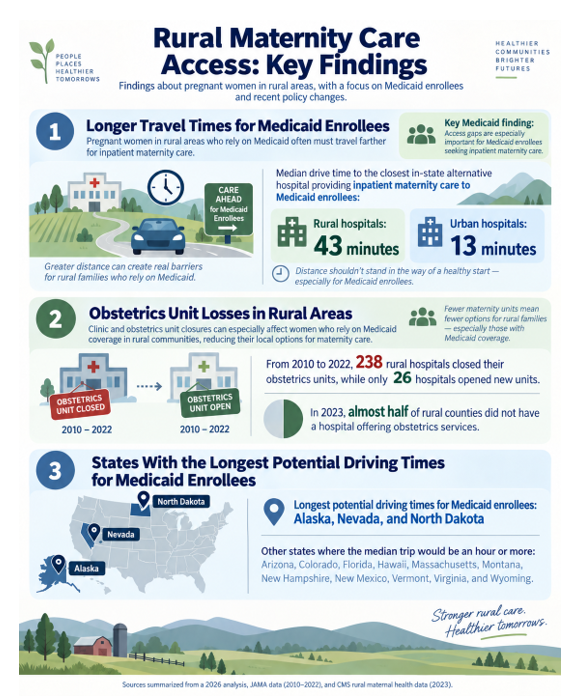
Rural maternal healthcare disparities have persisted for decades, and continued hospital and obstetric unit closures are making access increasingly difficult. Longer travel times, fewer available specialists, and limited birthing facilities can create significant barriers to prenatal, delivery, and postpartum care, particularly for women who rely on Medicaid or live far from urban medical centers.
Improving maternal health outcomes will require sustained investment in rural obstetric services, affordable insurance coverage, transportation support, telehealth, and community-based resources. Organizations such as the March of Dimes and the Health Resources and Services Administration can also help connect families with financial assistance, healthcare services, and maternal health resources.
Ultimately, where a woman lives should not determine whether she can access timely, high-quality maternity care. Addressing these disparities will require continued attention from healthcare systems, policymakers, and communities nationwide.
About the author: Parker Lynch holds a B.S. in Global Public Health and Applied Psychology from New York University, and currently works as a Psychiatric Technician at Huntsman Mental Health Institute. To pursue her passion for public health and health education, she wants to be a physician.
Photo credit: Miguel Ausejo on Unsplash


© BLASTER, all rights reserved
.png)


.svg)

